


Business & Technology 2026
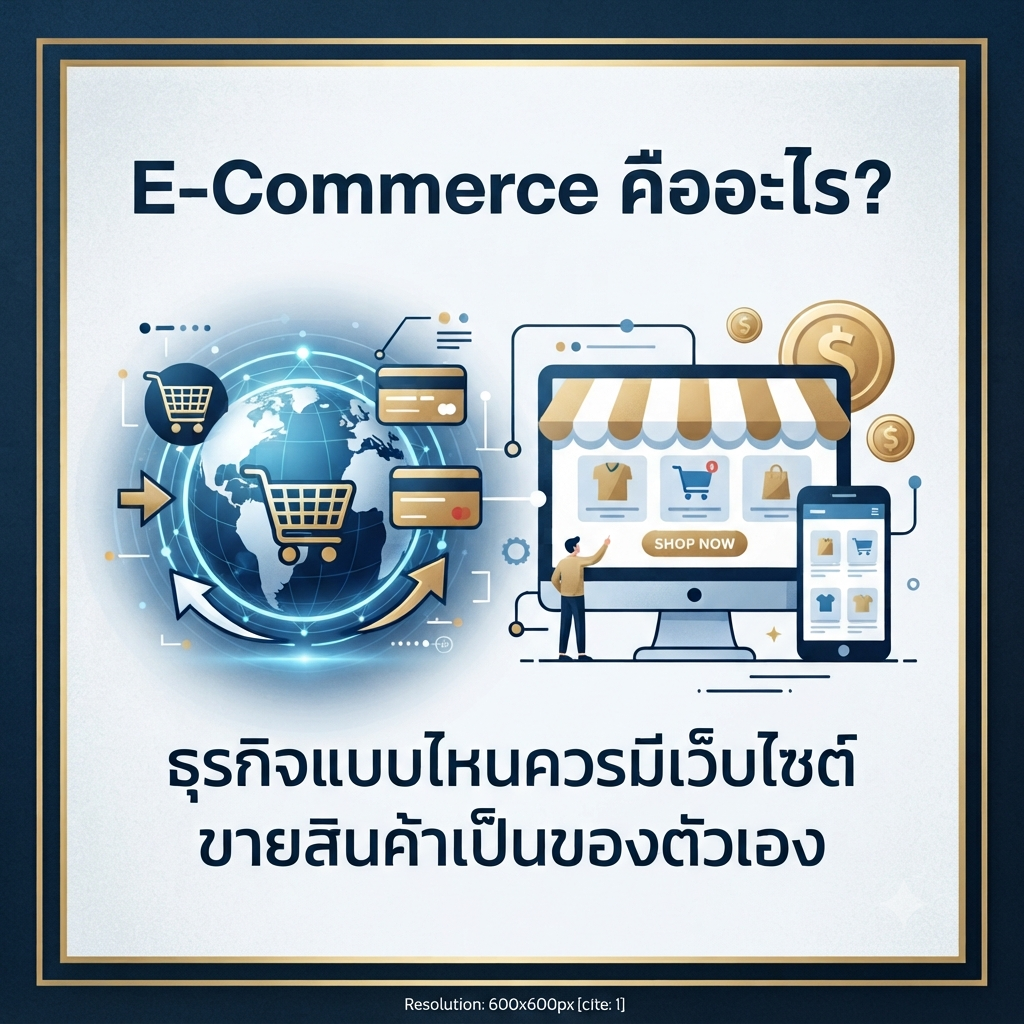
What is E-Commerce?
Does Your Business Need an Online Store?
Moving beyond basic definitions to analyze why E-Commerce systems are the crucial gears driving direction, profitability, and survival in the digital era.
Why is this topic important?
Today, users searching for "What is E-Commerce" aren't just looking for a dictionary definition. They are facing a major decision: Should we invest in building an online commerce website? What's the budget? And which problem should we solve first?
This article aims to provide an in-depth answer, covering the What, Why, How, and What Next, while transparently addressing limitations to give you a complete picture of the investment.
Key Takeaways
- SEO & Visibility: Implementing Product Structured Data allows your product information (price, stock, reviews, shipping) to appear natively and attractively on search engines.
- Seamless UX: The purchasing experience must be frictionless, from product discovery all the way to checkout.
- Omnichannel Consistency: Product details, pricing, inventory, and orders must act as a Single Source of Truth across all sales channels.
- Backend Integration: Connecting your backend systems (ERP/OMS/CRM) massively reduces human error and redundant tasks.
- Full-Funnel Measurement: Proper tracking goes beyond final sales; it must encompass view_item, add_to_cart, begin_checkout, and purchase events.
- Scalability: System architecture must be designed to accommodate future growth in product lines, new channels, and increased order volume.
Actionable Steps for Implementation
To successfully implement E-Commerce, start by establishing a Baseline of your current operations, setting measurable goals, and prioritizing high-impact changes. We recommend these steps:
- Define Business Model & Channels: Be clear on your target audience and distribution methods.
- Design the Customer Journey: Make product data highly searchable and craft an exceptional experience across every touchpoint.
- Integrate Backend & Payments: Automate payment processing and inventory deduction as much as possible.
- Measure & Optimize (CRO): Base your decisions on actual data, not just intuition.
Common Pitfalls
- Choosing tools or features before clearly defining the actual business problem and Success Criteria.
- Relying on outdated articles rather than consulting the latest Official Documentation from platforms.
- Measuring success with a single metric (e.g., traffic) while ignoring crucial business outcomes like Conversion, Revenue, or operational workload.
- Deploying changes to Production without Quality Assurance (QA), proper Monitoring, or a Rollback plan.
Frequently Asked Questions (FAQ)
Ready to Elevate Your Business?
E-Commerce is an integral part of your business ecosystem, not an isolated task. If you want to seamlessly connect your technology, content, and operations perfectly together.
Consult Our Experts


